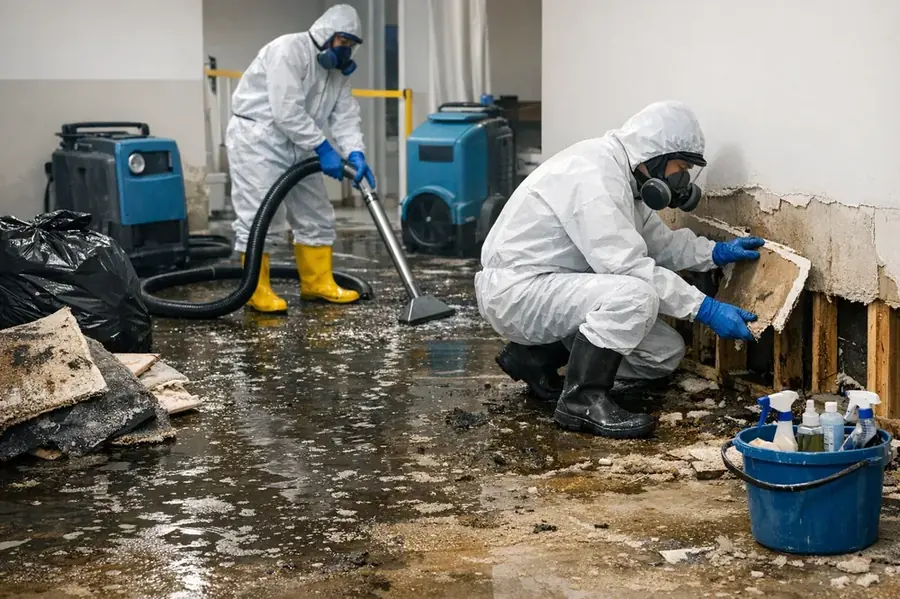
How the crew handles sewage & black water cleanup in Atlanta
Call & dispatch
A real person answers 24/7 and the nearest Atlanta crew rolls with truck-mounted pumps, air movers, and moisture meters.
On-site assessment
The crew finds the source and the full reach of the water, including what soaked into subfloor, wall cavities, and crawl space.
Extract & dry
The extraction crew pulls the standing water, then runs air movers and dehumidifiers to a verified dry standard, not just the surface.
Verify & document
The drying team logs moisture readings until the structure is dry, then documents the loss for your insurance claim.
A sewage backup is never just dirty water on the floor. Raw sewage is Category 3 black water and needs a trained crew in protective gear, not a mop and a bucket. The Atlanta water damage pros answer the phone live around the clock and roll a decontamination crew to pump it out, disinfect, and make your home safe again.
What Category 3 black water really means
Restoration crews sort water into three categories, and sewage is Category 3, the most dangerous, often called black water. It carries raw human waste, bacteria such as E. coli, viruses, and parasites, so the cleanup is a health job first, a drying job second.
That category also decides what stays and what goes, because contaminated water soaks into porous materials and cannot be safely disinfected out of them.
- Porous materials the sewage touched, drywall, carpet, pad, and insulation, are cut out and thrown away.
- Hard, non-porous surfaces like tile, concrete, and sealed masonry are cleaned, disinfected, and saved.
Keep people and pets away from the water and let a crew in protective gear handle it. For guidance on the health risks of sewage cleanup, the CDC guidance on flood cleanup and health is a solid, readable source.
Why Atlanta basements back up in heavy rain
Most sewage jobs here are not a broken toilet, they are a backup, where waste flows the wrong way up the lowest opening, usually a basement floor drain.
Older parts of Atlanta run on aging sewers, and downtown and several intown basins still use combined lines carrying sewage and stormwater in one pipe. When a hard rain overwhelms that shared pipe, it surcharges and pushes waste backward into the lowest connected basements, no fault of your own plumbing.
The City has spent years under federal consent decrees rebuilding this system, and the City of Atlanta Department of Watershed Management is the authority on the public lines. Low basements in Mechanicsville, Peoplestown, and Summerhill tend to see it most, because they sit below grade with an open floor drain and take the water first.
Sewage in your basement? Do not wade in or clean it yourself. A decontamination crew heads your way, day or night.
☎ Call (678) 586-7595Health risks and getting started
Sewage is a genuine health hazard. Contact with black water or breathing its aerosols can cause stomach illness, skin and eye infections, and breathing problems, with higher risk for children, older adults, and anyone with a weak immune system.
Keep everyone out until it is decontaminated. Sewage that soaks into framing can also feed mold within a day or two in Atlanta's humidity, so the mold remediation crew treats it in the same visit if it has started.
Cost matters too, because sewage is one of the more expensive water losses. Standard homeowners policies often exclude sewer backup unless you carry a water-backup rider, so check yours. The restoration team documents everything with dated photos and moisture readings for your claim. Call (678) 586-7595 any hour and a decontamination crew makes the space safe again.
The smell is the early warning
A sewer backup almost always announces itself first. If you notice a sulfur or sewage odor near a floor drain, a gurgle in the toilet when you run the sink, or several drains emptying slowly all at once, stop running water in the house and call before a small backup becomes a flooded basement.
Getting the smell out for good
The odor lingers only when contaminated material stays behind. The crew removes every porous item the sewage soaked, disinfects the surfaces, dries the structure, then deodorizes, so once the source is gone and the area is dry the smell is gone with it.
One crew handles the whole job, from the first pump-out through the final drying and paperwork. If the backup followed a storm that also flooded the lower level, the flooded basement cleanup team handles that in the same trip.
Why Atlanta calls the local pros first
Rapid local response
The response team answers 24/7, and the nearest crew heads out the moment you call, any hour, anywhere across metro Atlanta.
IICRC S500 drying standard
Trained crews run truck-mounted pumps, air movers, and moisture meters, drying to a verified standard, not a mop and a bucket.
Claim-ready documentation
The loss is documented with photos and daily moisture readings, the paperwork an adjuster needs to move a claim.
Local water experts
Red clay basements, vented crawl spaces, combined sewers, and creek floodplains, the local pros know how water moves in Atlanta.
From Buckhead to the West End, the whole city
From the Historic Westside, crews respond across the City of Atlanta and the intown ring, day or night.
From the Historic Westside, local crews cover the City of Atlanta and the intown ring across Fulton and DeKalb, day or night.
Coverage includes Buckhead, Midtown, Virginia-Highland, Grant Park, East Atlanta, Kirkwood, the West End, the Historic Westside, Decatur, Brookhaven, and Sandy Springs.
See every neighborhood and ZIP covered ›Related restoration services
Common questions, answered
What should I do right after a sewage backup?
Keep people and pets away from the water, stop running any water in the house, and shut off power to the affected area only if you can reach the panel safely. Do not try to clean sewage yourself. Call (678) 586-7595 and a decontamination crew heads your way.
Can a backed-up sewer in my basement make me sick?
Yes. Black water carries bacteria, viruses, and parasites, and even breathing the aerosols can cause stomach illness, infections, and breathing problems. Children, older adults, and anyone with a weak immune system are most at risk, so stay out of the flooded area until it is cleaned.
Is it safe to stay in the house after a sewage backup?
If the sewage is confined to a basement you can close off, the rest of the home is usually fine to occupy while the crew works. If it spread into living space or across a large area, it is safest to stay out of that part of the house until it has been decontaminated and dried.
What causes basement sewer backup in Atlanta?
Usually a combined sewer that surcharges in heavy rain, an aging or clogged line, tree roots or grease in the pipe, or a blockage in the public main under the street. Low intown basements back up first because they sit below grade with an open floor drain.
Can heavy rain cause a backup even if my pipes are fine?
Yes, and it is common here. Parts of Atlanta still run on combined sewers that carry sewage and stormwater in one pipe, so when rain overwhelms the system it surcharges and pushes water back up through low basement floor drains, with no fault in your own plumbing.
What gets removed and thrown out after a sewage spill?
Category 3 water cannot be disinfected out of porous materials, so soaked drywall, carpet, pad, insulation, particleboard, and cardboard are cut out and disposed of. Hard, non-porous surfaces like tile, concrete, and sealed masonry are cleaned, disinfected, and saved.
Does insurance cover sewage cleanup in Atlanta?
Standard homeowners policies often exclude sewer backup unless you carry a water-backup rider, so check your policy. The restoration team documents the loss with dated photos and moisture readings for your claim so it moves. Call (678) 586-7595 and someone will walk you through it.
How fast can a sewage backup be handled?
The Atlanta line is answered live 24 hours a day and a decontamination crew heads out right away. Extraction and removal of contaminated materials usually happen the same day, and drying and deodorizing typically run three to five days depending on how far the sewage spread.
How do you get the sewage smell out for good?
The smell lingers only when contaminated material stays behind, so the crew removes every porous item the sewage soaked, disinfects the surfaces, dries the structure fully, and then deodorizes. Once the source is gone and the area is dry, the odor is gone with it, not just masked.
Atlanta's water damage crew is ready when you are
Water sitting means damage spreading. Call Diamond Atlanta and a local crew heads out across metro Atlanta, day or night.
(678) 586-7595Call now, a live Atlanta dispatcher picks up any hour