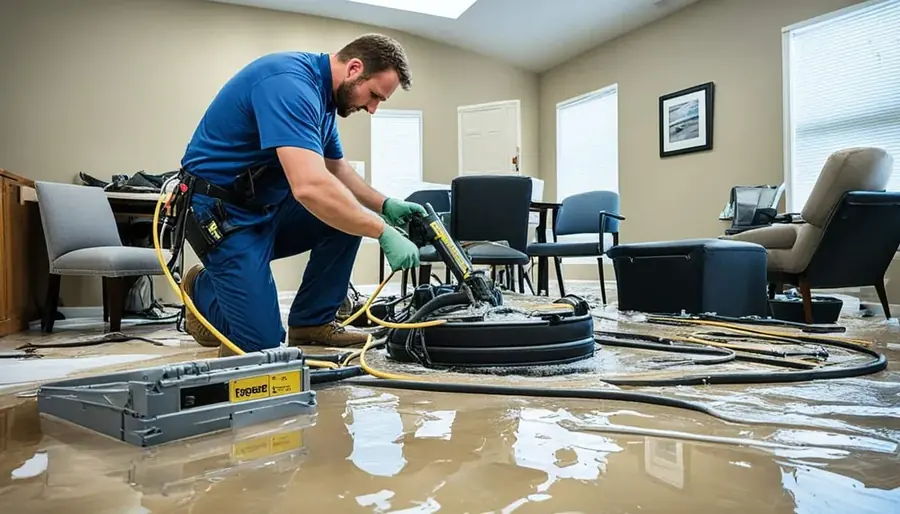
How the crew handles flood & flash flood cleanup in Atlanta
Call & dispatch
A real person answers 24/7 and the nearest Atlanta crew rolls with truck-mounted pumps, air movers, and moisture meters.
On-site assessment
The crew finds the source and the full reach of the water, including what soaked into subfloor, wall cavities, and crawl space.
Extract & dry
The extraction crew pulls the standing water, then runs air movers and dehumidifiers to a verified dry standard, not just the surface.
Verify & document
The drying team logs moisture readings until the structure is dry, then documents the loss for your insurance claim.
Flood water is not the same problem as a burst pipe. When water rises into your home from a flash flood or an overflowing creek, it comes in dirty, carrying mud, road runoff, lawn chemicals, and often sewage, and soaks everything at floor level at once. Pumping it out fast and treating what it touched as contaminated is what protects your health and your home.
How Atlanta floods
Atlanta flooding does not look like the coast. The water that reaches homes here comes from a few local patterns:
- Flash flooding from short, intense downpours that overwhelm storm drains in minutes and back water into yards, garages, and basements.
- Urban runoff across the metro's dense red clay, which sheds water fast instead of soaking it up, so streets and low lots flood quickly.
- Creek and floodplain flooding along Peachtree Creek, Nancy Creek, and the Chattahoochee, which rise fast and flood the same streets again and again.
The September 2009 metro flood is still the benchmark, when a stalled system dropped more than twenty inches of rain and creeks reached levels expected only once in centuries. You can check watches and warnings through the National Weather Service in Peachtree City, and read flood safety guidance at Ready.gov on floods.
Flood water is category 3, not clean rain
This is the part people underestimate. Water that rises from outside is category 3, the most contaminated class, because it ran across roads, yards, and sewers before it reached your floor. It carries bacteria, chemicals, and silt, and cannot be dried in place the way a clean supply line leak sometimes can.
That changes the job. Porous materials that soaked through, carpet and pad, wet drywall low on the wall, and soaked insulation, usually come out rather than dry in place. Everything the water touched is cleaned and sanitized, not just dried, for the health reasons laid out in the CDC guidance on flood water and standing water.
The Atlanta flood cleanup process
The Atlanta water damage pros answer 24/7 and roll a crew right away, because flood water keeps spreading and contaminating while it sits:
- Extract the standing water from living space, basements, and crawl spaces.
- Remove the porous materials that soaked through and cannot be saved.
- Clean and sanitize every surface the flood water touched, then dry the structure to a verified standard.
- Apply an antimicrobial and document the loss for your claim.
When the water collected in the lowest level, the flooded basement crew works it with us, and when a sewer backed up in the same event, the sewage and black water team handles that side as the biohazard it is.
Flood insurance and getting started
Coverage is where flooding surprises people. A standard homeowners policy usually does not pay for water that rises into the home from outside, that falls under a separate flood policy, while the same storm's wind or roof damage is a different claim. If the storm also breached your roof, that is storm damage restoration, which may be covered where the flood is not. The crew documents the water line, source, and readings either way. Stay out of standing water near outlets and panels, and call, a crew heads your way day or night.
Flood water gets more contaminated the longer it sits. Call now and a crew is on the way.
☎ Call (678) 586-7595Why the same Atlanta homes flood again and again
Flooding in the metro is rarely a one time event for the homes it hits. The dense red clay under the city sheds water instead of absorbing it, so a hard downpour runs straight into the low streets and basements in a creek floodplain. Peachtree Creek, Nancy Creek, and the Chattahoochee thread through neighborhoods like Peachtree Hills and Vinings, and the houses along them take water storm after storm rather than once in a lifetime.
Why Atlanta calls the local pros first
Rapid local response
The response team answers 24/7, and the nearest crew heads out the moment you call, any hour, anywhere across metro Atlanta.
IICRC S500 drying standard
Trained crews run truck-mounted pumps, air movers, and moisture meters, drying to a verified standard, not a mop and a bucket.
Claim-ready documentation
The loss is documented with photos and daily moisture readings, the paperwork an adjuster needs to move a claim.
Local water experts
Red clay basements, vented crawl spaces, combined sewers, and creek floodplains, the local pros know how water moves in Atlanta.
From Buckhead to the West End, the whole city
From the Historic Westside, crews respond across the City of Atlanta and the intown ring, day or night.
From the Historic Westside, local crews cover the City of Atlanta and the intown ring across Fulton and DeKalb, day or night.
Coverage includes Buckhead, Midtown, Virginia-Highland, Grant Park, East Atlanta, Kirkwood, the West End, the Historic Westside, Decatur, Brookhaven, and Sandy Springs.
See every neighborhood and ZIP covered ›Related restoration services
Common questions, answered
Is flood water really that different from a pipe leak?
Yes. Water that rises from outside is category 3, the most contaminated class, carrying mud, chemicals, and sewage. It has to be cleaned and sanitized, not just dried, and soaked porous materials usually come out.
Will my homeowners insurance cover the flood?
Usually not on its own. Water that rises into the home from outside typically needs a separate flood policy, while the same storm's wind or roof damage can be a different, covered claim. The crew documents both so nothing is missed.
Can you save carpet and drywall that flooded?
Carpet and pad, low drywall, and insulation that soaked in flood water usually have to be removed because of the contamination. The crew meters and inspects, saves what can be saved, and tells you plainly what cannot.
How fast should I act after a flood?
Immediately. Flood water spreads and grows more contaminated by the hour, and mold can start within 24 to 48 hours in this humidity. The sooner the crew extracts and sanitizes, the more of the home is saved.
Which Atlanta areas flood the most?
The creek floodplains lead the list, along Peachtree Creek, Nancy Creek, and the Chattahoochee, plus any low street where storm drains back up in a hard rain. Crews respond across the metro, so call with your address.
What should I do before you arrive?
Stay out of standing water near outlets and panels, do not use wet electronics, and move what you can to dry ground if it is safe. Photograph the water line and the damage for your claim, then call.
Atlanta's water damage crew is ready when you are
Water sitting means damage spreading. Call Diamond Atlanta and a local crew heads out across metro Atlanta, day or night.
(678) 586-7595Call now, a live Atlanta dispatcher picks up any hour