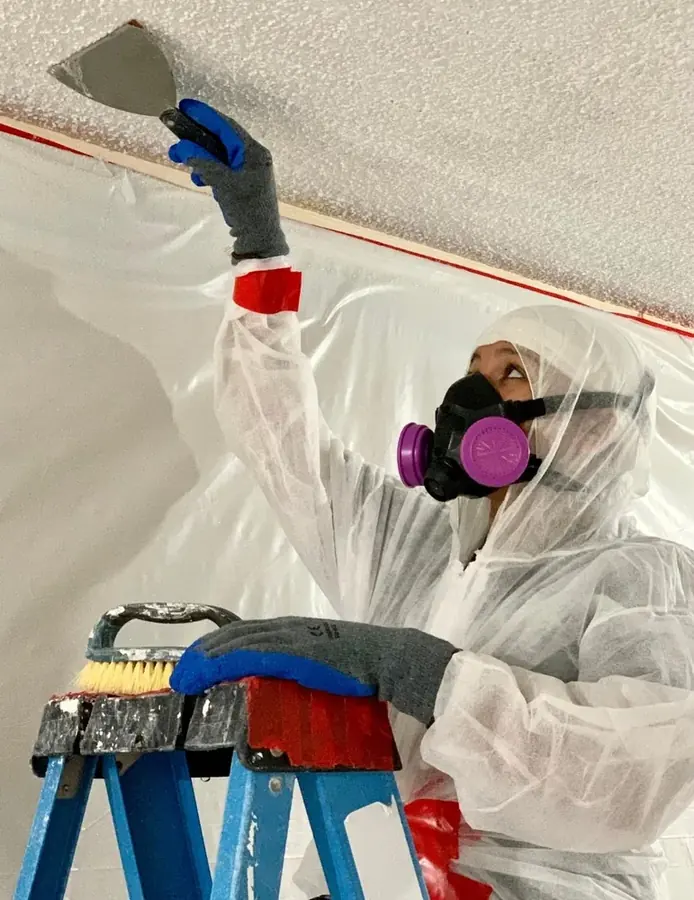
How the crew handles ceiling leak water damage in Atlanta
Call & dispatch
A real person answers 24/7 and the nearest Atlanta crew rolls with truck-mounted pumps, air movers, and moisture meters.
On-site assessment
The crew finds the source and the full reach of the water, including what soaked into subfloor, wall cavities, and crawl space.
Extract & dry
The extraction crew pulls the standing water, then runs air movers and dehumidifiers to a verified dry standard, not just the surface.
Verify & document
The drying team logs moisture readings until the structure is dry, then documents the loss for your insurance claim.
A stained or bulging ceiling almost never starts at the ceiling. The water came from somewhere higher, an upstairs bathroom, a supply line, or the attic air handler, and it has already soaked the joists and insulation by the time a ring shows through the paint. Finding that source and drying the cavity fast keeps a small stain from turning into sagging drywall and mold in Atlanta's humidity.
Where Atlanta ceiling leaks start
Almost every ceiling leak traces to water from inside the house, not the weather. The usual sources are:
- Upstairs plumbing that fails above a finished ceiling, a pinhole in a supply line, a leaking shower pan, or a toilet supply.
- Appliance overflows on an upper floor, where a washing machine hose or a second-story water heater sends water straight down.
- Summer HVAC condensation from the attic air handler, where a clogged condensate drain or sweating duct drips all season.
A ceiling that stains with no storm in sight is almost always one of these rather than the roof. If the water comes through the roof itself, that is a different job, and the roof leak crew handles the attic. Either way, a hidden ceiling cavity is one of the easiest places for mold to take hold, exactly what the EPA guidance on cleaning up mold and moisture warns about.
A sagging ceiling is a safety problem
The most common mistake is waiting to see whether a stain gets worse. Wet drywall grows heavy and can sag, crack, and come down without much warning. In an older Atlanta home with plaster and lath it is worse, because saturated plaster lets go in sheets.
There is an electrical risk too. Ceilings carry recessed can lights and junction boxes, and water in the cavity can fill those and travel down the wiring. If a fixture is dripping or a ceiling is bulging near one, keep people out and shut off the circuit at the breaker first. Trapped moisture can also grow mold within 24 to 48 hours, and the CDC guidance on mold in the home is clear that controlling the moisture controls the mold.
Drying the ceiling without gutting it
The crew works the leak from the source down, so the water stops and the structure dries without tearing out more than necessary:
- Trace the leak to its source with moisture meters and thermal imaging before opening anything.
- Stop the active leak at the fixture or line so no more water reaches the ceiling.
- Dry the ceiling, cavity, joists, and insulation to a verified standard, opening only what must come out.
- Treat the cavity with an antimicrobial, then hand off any drywall or plaster rebuild.
When water ran down inside the walls or reached a lower floor, the structural drying and mold remediation teams work the same loss.
Insurance and getting started
Homeowners policies usually cover a sudden ceiling leak, such as an upstairs supply line that lets go, while a slow drip ignored for months can be called maintenance. The restoration team documents the source and moisture readings for your claim, and the water extraction crew steps in when the leak already reached the floor. Call and a crew heads your way, day or night.
That ceiling stain is heavier and wetter than it looks. Call now and a crew is on the way.
☎ Call (678) 586-7595Why Atlanta ceilings leak in summer with no rain
Plenty of ceiling leaks here have nothing to do with a storm. Atlanta attics get brutally hot and humid, and a central air system running all summer produces a constant stream of condensation. When the condensate drain clogs or a duct sweats, that water drips onto the ceiling below day after day, staining the drywall in an Inman Park bungalow long before anyone checks the attic. A stain that appears in July, with no rain, is usually the air handler, not the roof.
Why Atlanta calls the local pros first
Rapid local response
The response team answers 24/7, and the nearest crew heads out the moment you call, any hour, anywhere across metro Atlanta.
IICRC S500 drying standard
Trained crews run truck-mounted pumps, air movers, and moisture meters, drying to a verified standard, not a mop and a bucket.
Claim-ready documentation
The loss is documented with photos and daily moisture readings, the paperwork an adjuster needs to move a claim.
Local water experts
Red clay basements, vented crawl spaces, combined sewers, and creek floodplains, the local pros know how water moves in Atlanta.
From Buckhead to the West End, the whole city
From the Historic Westside, crews respond across the City of Atlanta and the intown ring, day or night.
From the Historic Westside, local crews cover the City of Atlanta and the intown ring across Fulton and DeKalb, day or night.
Coverage includes Buckhead, Midtown, Virginia-Highland, Grant Park, East Atlanta, Kirkwood, the West End, the Historic Westside, Decatur, Brookhaven, and Sandy Springs.
See every neighborhood and ZIP covered ›Related restoration services
Common questions, answered
My ceiling is stained but not dripping, do I still call?
Yes. A stain means water already reached the ceiling and the cavity above is likely still damp. In this humidity that trapped moisture can grow mold within 24 to 48 hours, so it is worth a moisture check even when nothing is dripping.
What usually causes a ceiling leak in Atlanta?
Most trace to something inside the house above the ceiling, an upstairs plumbing failure, an appliance overflow, or summer condensation from the attic air handler. The crew finds the true source before opening anything.
Is a bulging ceiling dangerous?
It can be. Wet drywall and plaster get heavy and can sag or fall, and water can reach light fixtures and wiring in the ceiling. Keep people out of the room, shut off the circuit if a fixture is wet, and call.
Can you dry the ceiling without tearing it out?
Often, yes. With early access the crew dries the ceiling cavity and joists in place with controlled airflow, opening only what has to be opened. Drywall that is sagging or contaminated is safer to remove.
Will insurance cover a ceiling leak?
A sudden leak, such as an upstairs pipe letting go, is usually covered, while a slow drip left for months can be called maintenance. The restoration team documents the source and the readings for your claim.
How fast can a crew get here?
The Atlanta line is answered 24/7 and the nearest crew heads out right away, which matters because a ceiling holding water can sag or come down if it is left too long.
Atlanta's water damage crew is ready when you are
Water sitting means damage spreading. Call Diamond Atlanta and a local crew heads out across metro Atlanta, day or night.
(678) 586-7595Call now, a live Atlanta dispatcher picks up any hour