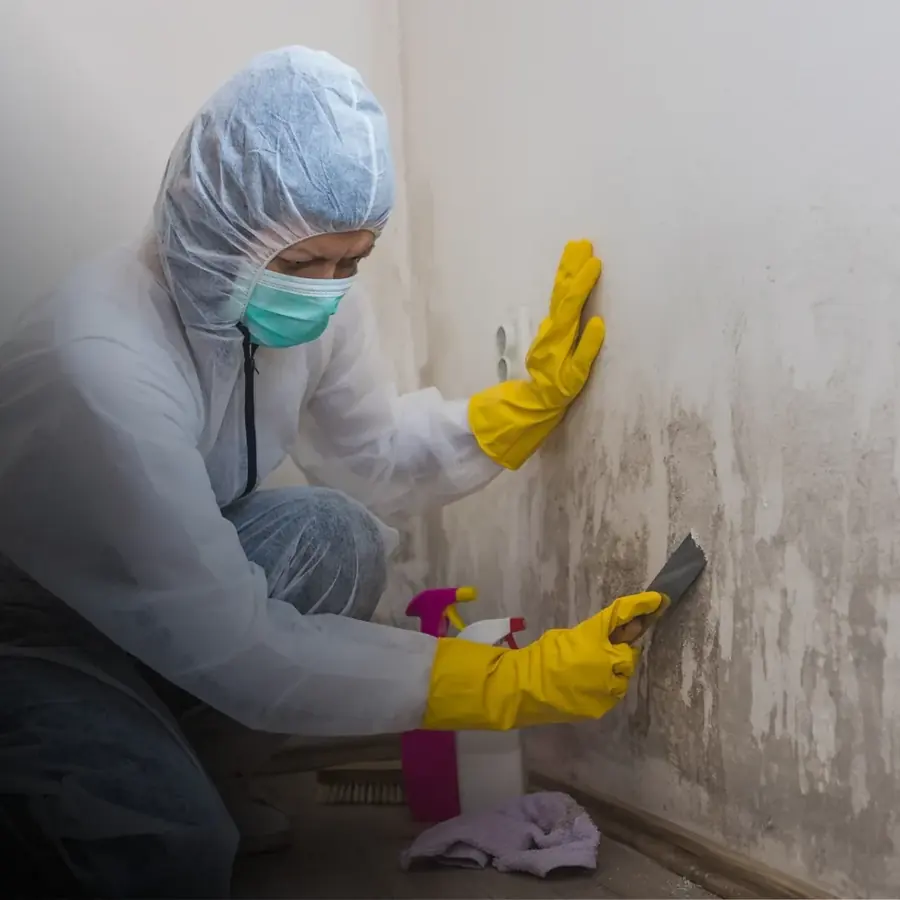
How the crew handles mold remediation in Atlanta
Call & dispatch
A real person answers 24/7 and the nearest Atlanta crew rolls with truck-mounted pumps, air movers, and moisture meters.
On-site assessment
The crew finds the source and the full reach of the water, including what soaked into subfloor, wall cavities, and crawl space.
Extract & dry
The extraction crew pulls the standing water, then runs air movers and dehumidifiers to a verified dry standard, not just the surface.
Verify & document
The drying team logs moisture readings until the structure is dry, then documents the loss for your insurance claim.
Mold in Atlanta almost always starts as water that stayed too long, a slow leak behind a cabinet or a damp basement wall in Atlanta's humid subtropical climate. Local crews remediate mold across the City of Atlanta and intown Fulton and DeKalb, from a small closet patch to a whole flooded lower level. The crew finds the moisture, contains the area, removes the mold safely, and fixes the source.
Why Atlanta homes grow mold so fast
Atlanta hands mold everything it needs: long muggy summers, high dew points, and closed-up rooms where leftover moisture feeds a colony fast.
- Humid subtropical climate and the 24 to 48 hour clock: any water left after a leak or flood can start growing mold in a day or two.
- Basements and vented crawl spaces: dense red clay and unconditioned crawl spaces under older homes stay damp, which is why a wet crawl space so often turns into mold on the joists above.
- Post-flood and slow-leak moisture: a summer storm that floods a lower level, or a pinhole line weeping for months, both end the same way if drying is slow, so the flooded basement, water extraction, and mold crews work together.
The EPA guidance on mold and moisture is blunt: control the moisture and you control the mold, which is why every job starts and ends with the water.
The mold remediation process
Mold remediation follows a set order, and skipping a step is how it grows back a month later. Here is how the local Atlanta crews work.
- Inspection and moisture mapping to find every wet cavity and see how far the mold has spread.
- Containment with poly sheeting and HEPA-filtered negative air so spores cannot drift into clean rooms.
- Removal of contaminated porous material, a HEPA vacuum, and an EPA-registered antimicrobial.
- Fixing the moisture source first, because nothing lasts while the water is still running.
- Structural drying and a final clearance so you have proof the mold is gone.
Mold can spread through a wall cavity in days, so the sooner it is contained the less has to come out.
☎ Call (678) 586-7595Removal, remediation, and abatement, and the black-mold facts
People use three words for the same job. Removal and abatement are the taking-out step; remediation is the full process that brings mold back to a safe level, fix the moisture, remove contaminated material, clean, and prevent its return.
Breathing spores can trigger allergic reactions, asthma flare-ups, and irritation of the eyes, skin, throat, and lungs, hardest on infants, older adults, and anyone with a weak immune system. Black mold usually means Stachybotrys on constantly wet drywall, though all indoor mold should come out whatever its color. Anything inside walls, in the HVAC, or larger than a small patch is a job for a certified crew, as the CDC guidance on mold and health makes clear.
Source removal is what lasts
Killing surface mold without fixing the moisture source only buys a few weeks, because it grows back wherever the water returns. The crew fixes the water first, then remediates and dries the structure. That order is the difference between a repair that holds and one you pay for twice.
Certifications, insurance, and getting started
Mold work is handled to the IICRC standard, with containment, HEPA filtration, and an EPA-registered antimicrobial. Georgia does not license mold work as a trade, so what matters is the method: find the moisture, contain the area, and remove the contaminated material safely.
Insurance for mold usually turns on the cause: a sudden covered loss like a burst supply line is often covered, while slow leaks and long-term humidity are treated as maintenance. The restoration team documents the loss for your claim. Call for an exact quote, from Kirkwood and Edgewood to Sandy Springs and Decatur.
Why Atlanta calls the local pros first
Rapid local response
The response team answers 24/7, and the nearest crew heads out the moment you call, any hour, anywhere across metro Atlanta.
IICRC S500 drying standard
Trained crews run truck-mounted pumps, air movers, and moisture meters, drying to a verified standard, not a mop and a bucket.
Claim-ready documentation
The loss is documented with photos and daily moisture readings, the paperwork an adjuster needs to move a claim.
Local water experts
Red clay basements, vented crawl spaces, combined sewers, and creek floodplains, the local pros know how water moves in Atlanta.
From Buckhead to the West End, the whole city
From the Historic Westside, crews respond across the City of Atlanta and the intown ring, day or night.
From the Historic Westside, local crews cover the City of Atlanta and the intown ring across Fulton and DeKalb, day or night.
Coverage includes Buckhead, Midtown, Virginia-Highland, Grant Park, East Atlanta, Kirkwood, the West End, the Historic Westside, Decatur, Brookhaven, and Sandy Springs.
See every neighborhood and ZIP covered ›Related restoration services
Common questions, answered
What is the difference between mold removal, remediation, and abatement?
Removal is the everyday word, but no one can strip every last spore from indoor air. Remediation is the full professional process that brings mold back to a normal, safe level: find and fix the moisture, remove contaminated material, clean, and stop it from returning. Abatement is the hands-on removal step itself. When people say they want mold removed, what they really need is remediation.
How much does mold removal cost in Atlanta?
It depends on how large the area is, where the mold is hiding, and how much material has to come out and be rebuilt. A small contained patch is modest; a whole damp basement or crawl space with hidden growth costs more. The crew gives you a clear written scope before any work starts. Call (678) 586-7595 for an exact quote on your home.
Will insurance pay for mold removal?
It usually turns on the cause. Mold that grows from a sudden covered loss, like a burst supply line cleaned up promptly, is often covered. Mold from a slow, long-ignored leak or ongoing humidity is usually treated as a maintenance issue and denied, and many policies also cap mold coverage. The restoration team documents the loss with photos and moisture readings for your claim, to give it its best shot.
What is black mold and what are the exposure symptoms?
Black mold usually refers to Stachybotrys, which grows on constantly wet, paper-rich material like drywall and plaster. Exposure can bring on allergic reactions, asthma flare-ups, and irritation of the eyes, skin, throat, and lungs, with the strongest effects in infants, older adults, and anyone with asthma or a weak immune system. You do not need to panic about the color, but all indoor mold should be removed, and larger jobs call for a certified crew and real containment.
What permanently stops mold, and why does source removal matter?
Nothing you spray keeps mold gone if the moisture stays. Mold comes back wherever water comes back, so the lasting fix is removing the water source and drying the structure completely, then cleaning and removing contaminated material. Wiping bleach over a wet wall only hides the problem until it grows through again.
Should I stay home during remediation?
For a small contained job, usually yes. For larger work, or if someone in the home has asthma or a weak immune system, it is often better to stay clear of the work area while the crew runs containment and negative air. The sheeting and HEPA machines keep spores out of the rest of the home either way.
Can I remove mold myself?
A small, clean patch under about ten square feet on a hard surface can often be handled at home with gloves, an N95, and care. Larger areas, anything inside walls or the HVAC, mold from sewage or floodwater, and anything that keeps coming back call for a certified crew with proper containment. When in doubt, have it looked at before you disturb it.
How do I know if I have hidden mold?
The usual tells are a persistent musty smell, staining or warping near an old leak, and allergy symptoms that ease when you leave the house. Any history of a flooded basement, a wet crawl space, or a slow plumbing leak raises the odds. The crew confirms it with moisture meters, thermal imaging, and, where needed, air and surface sampling before opening anything up.
Why is Atlanta so mold-prone?
Atlanta's humid subtropical climate is the short answer. Long hot summers, high dew points, and frequent rain keep indoor humidity high, and any water left after a leak or flood can start growing mold in 24 to 48 hours. Older intown homes with basements and vented crawl spaces over Georgia red clay give that moisture plenty of places to sit, from Kirkwood and Edgewood to Druid Hills.
Atlanta's water damage crew is ready when you are
Water sitting means damage spreading. Call Diamond Atlanta and a local crew heads out across metro Atlanta, day or night.
(678) 586-7595Call now, a live Atlanta dispatcher picks up any hour